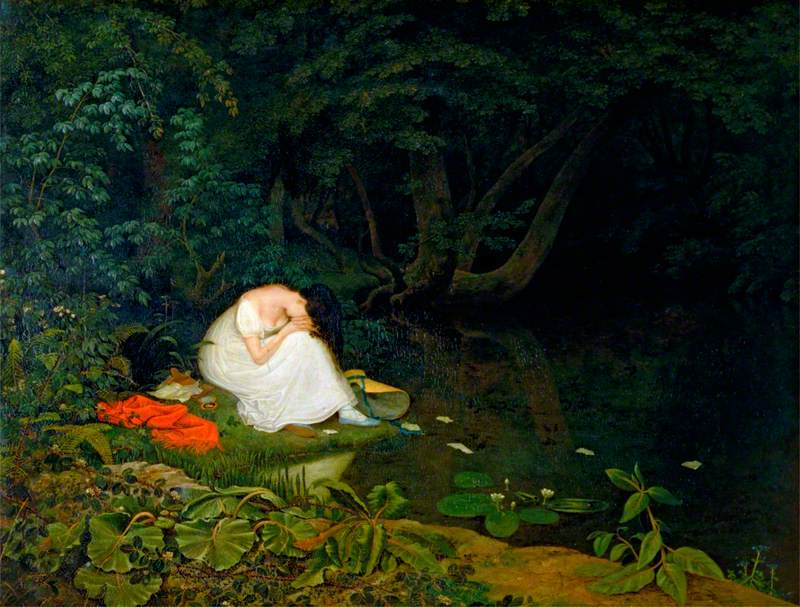
Francis Danby’s painting, Disappointed love, combines the styles of landscape art and figure painting. He depicts a natural scenery suffused with greenery that creates a prime focus on the pale, mourning, female figure. Her body radiates with desolation as she weeps into her lap concealing her face from viewers. Danby’s painting highlights the effects of loss, heartache, and the longing for company. Likewise, Mary Shelley’s Frankenstein irradiates the yearning for a companion from the preface and onward through the book. The character Robert Walton writes letters to his sister Margaret Saville expressing his heartache and solitude. He wrote to her saying “I have no friend, Margaret: when I am glowing with the enthusiasm of success, there will be none to participate in my joy” (Shelley 15). Both works constitute vivid models of a life filled with despair and desolation.
Works Cited
Danby, Francis. Disappointed Love. The Norton Anthology of British Literature: The Romantic Period. 10th ed. Stephen Greenblatt, General Editor. W. W. Norton 2018. C8.
Shelley, Mary. Frankenstein. 1818, 1831. Introduction and Notes by Karen Karbiener. Barnes and Noble, 2003.
 As a Matter of Fact
Emma, “The Depths of Desolation” presents a well-written and insightful examination of the parallels between Francis Danby’s Disappointed Love and Mary Shelley’s Frankenstein, in particular the sense of isolation and longing for companionship that Robert Walton expresses in his letters to his sister, Margaret Saville. Consider returning to the theme of desolation in your midterm analysis.
LikeLike